
The fiscal year 2024 represented a “tectonic shift” for Amazon.com, Inc. (AMZN), as the company moved past the post-pandemic fulfillment expansion into a high-margin era defined by operational precision and AI-scale infrastructure. While total revenue reached a massive $638 billion (up 11% YoY), the true story lies in the bottom line: net income nearly doubled to $59.3 billion. This performance underscores a transition where Amazon is no longer just “the world’s store,” but a diversified tech utility where AWS and Advertising now serve as the primary engines of capital appreciation, funding a historic $80B+ annual investment into generative AI.
As we analyze the 2024 data, it becomes clear that Amazon has unlocked a new level of capital efficiency. By regionalizing its fulfillment network and leveraging high-margin “services” revenue—which grew faster than its core retail business—the company achieved an operating margin of 10.8%, its highest in years. This report explores the ten financial pillars that define Amazon’s current fundamental standing, providing advanced readers with the data necessary to evaluate its dominance in the burgeoning “AI-Cloud” era.
In FY 2024, Amazon’s net sales reached $637.96 billion, an 11% increase from 2023. Critically, the revenue mix is shifting: while North American retail remains the largest segment ($387.5B), the fastest-growing and most profitable segments are AWS ($107.6B, +18.5%) and Advertising Services ($56.2B, +19.8%). For investors, this shift indicates that Amazon is successfully monetizing its massive customer data and infrastructure layers.
Amazon’s operating income skyrocketed 86% to $68.6 billion in 2024. This was largely driven by a massive overhaul of the U.S. fulfillment network from a national to a regional model. This efficiency cut “cost-to-serve” per unit for the first time in years, allowing the North America segment to post a healthy 6.4% operating margin, up from 4.2% in 2023.
Amazon Web Services (AWS) officially crossed the $100 billion annual revenue run rate in 2024, finishing the year at $107.6 billion. As enterprises shifted from “cost optimization” to “AI experimentation,” AWS margins expanded to 37%. AWS now accounts for roughly 60% of Amazon’s total operating profit, despite providing only 17% of its revenue.
Amazon reported a GAAP Net Income of $59.25 billion for 2024, a staggering 95% increase year-over-year. This led to a Diluted EPS of $5.53. Unlike previous cycles where Amazon’s bottom line was highly volatile due to Rivian stake valuations, 2024’s earnings were driven by “pure” operational leverage in its core business units.
Free cash flow for the trailing twelve months reached $38.2 billion, a recovery from the negative FCF years of 2021-2022. This is particularly impressive given that Amazon ramped up its Capital Expenditures (CapEx) to over $80 billion in 2024 to support the “Great AI Build-out.” The company is essentially generating enough cash to fund its own massive technological transformation.
Amazon’s advertising business is now larger than the entire revenue of many Fortune 500 companies, hitting $56.2 billion in 2024. With the introduction of ads on Prime Video and the continued dominance of “Sponsored Products” on its marketplace, this segment is estimated to have 70%+ gross margins, providing a vital buffer against lower-margin retail operations.
Amazon is currently the world leader in R&D and infrastructure spending. In 2024, it invested $83 billion in property and equipment. Management has signaled that over 90% of this technology infrastructure spend is dedicated to AWS and AI, specifically training and inference clusters for the Amazon Bedrock and Q platforms.
Third-party sellers now account for 60% of total units sold on Amazon. Revenue from 3P services (commissions and fulfillment fees) grew 11% to roughly $140 billion. This “asset-light” retail model allows Amazon to take a percentage of every sale without the inventory risk associated with 1P (first-party) retail.
Subscription revenue, primarily from over 200 million Prime members, reached $44.3 billion in 2024. This high-recurring revenue stream provides a “locked-in” floor for retail demand and supports the company’s multi-billion dollar annual investments in Prime Video and NFL broadcasting rights.
Amazon trades at a premium forward P/E compared to traditional retailers, reflecting its status as a SaaS and AI leader. While investors have expressed some “ROI anxiety” regarding the $100B+ CapEx guided for 2025, the company’s ability to maintain double-digit top-line growth at a $600B+ scale remains a primary valuation catalyst.
| Parameter | Amazon (AMZN) | Walmart (WMT) | Microsoft (Cloud) | Competitive Insight |
| Total Revenue | $638.0 Billion | $648.1 Billion | $245.1 Billion | Amazon is closing the gap with Walmart for the global revenue crown. |
| Operating Margin | 10.75% | 4.2% | 44.6% | Amazon’s margin is a “hybrid” of high-margin software and low-margin retail. |
| Cloud Revenue | $107.6 Billion | N/A | $105+ Billion (Est.) | AWS remains the largest single cloud, but Azure is growing at a similar pace. |
| Ad Revenue | $56.2 Billion | $3.4 Billion | $12.2 Billion | Amazon’s retail media network is vastly outperforming legacy retail competitors. |
| CapEx Spend | $83.0 Billion | $15.5 Billion | $50.0 Billion | Amazon is outspending everyone to build the AI infrastructure of the next decade. |
Amazon has successfully navigated its post-COVID “hangover” by transforming into a leaner, more automated enterprise. The 2024 financials prove that the company can balance massive capital investments in AI with record-breaking net income growth. For advanced readers, the key metric to track in 2025 will be the incremental FCF margin—specifically, how much of the $100B+ AI investment converts into high-margin software revenue versus staying as “sunken” infrastructure costs.
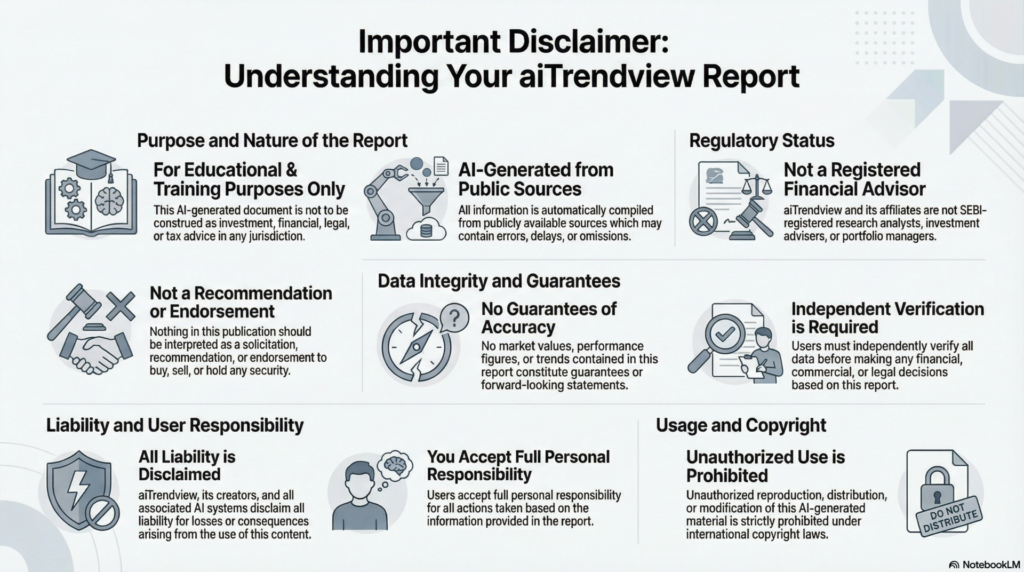
aiTrendview Global Disclaimer
This aiTrendview report is an AI-generated document provided exclusively for educational and training purposes and shall not be construed as investment, financial, legal, or tax advice in any jurisdiction.
aiTrendview and its affiliates are not SEBI-registered research analysts, investment advisers, or portfolio managers, and all information herein is automatically compiled from publicly available sources that may contain errors, delays, or omissions.
Users must independently verify all data before making any financial, commercial, or legal decisions, as no market values, performance figures, or trends contained in this report constitute guarantees or forward-looking statements.
Nothing in this publication should be interpreted as a solicitation, recommendation, or endorsement to buy, sell, or hold any security.
aiTrendview, its creators, and all associated AI systems disclaim all liability for losses or consequences arising from the use or reliance upon this content, and users accept full personal responsibility for all actions taken based on it.
Unauthorized reproduction, distribution, or modification of this AI-generated material is strictly prohibited under international copyright, compliance, and intellectual-property laws.