
This fundamental research report provides a deep-dive analysis of Microsoft Corporation (MSFT) based on the latest data from the fiscal year 2024 and the recently concluded 2025 reporting cycles. This report is designed for advanced readers, focusing on the company’s transition into an AI-native powerhouse and its massive capital allocation towards the next generation of computing.
The Intelligence Pivot: Microsoft’s Evolution into a GenAI Infrastructure Monopoly
The 2024–2025 period serves as a masterclass in platform transition. Microsoft has successfully parlayed its legacy software dominance into a leadership position in the Generative AI era. While the market focused on headline delivery numbers, Microsoft’s fundamentals revealed a more profound shift: the “Intelligent Cloud” segment is no longer just a hosting service; it has become the essential global compute layer for AI. With annual revenue surpassing $280 billion, Microsoft is leveraging its $36.5 billion R&D engine and strategic partnerships (notably OpenAI) to rewrite the economics of enterprise productivity.
The following analysis details the ten critical financial parameters that define Microsoft’s current valuation and long-term trajectory. As the company moves toward a $100 billion annual revenue run rate for Azure alone, investors must look beyond the Windows-era metrics to understand the “AI-CapEx flywheel” that is currently driving Microsoft’s multi-trillion-dollar market capitalization.
1. Top-Line Revenue Acceleration
In FY 2025, Microsoft reported total revenue of $281.7 billion, a robust 15% year-over-year (YoY) increase. This growth was remarkably consistent across quarters, demonstrating the resilience of a diversified subscription model. Unlike its hardware-heavy peers, Microsoft’s growth is driven by high-margin software-as-a-service (SaaS) and consumption-based cloud models, insulating the top line from supply chain shocks.
2. Cloud Dominance: The Azure Growth Engine
The “Intelligent Cloud” segment remains the crown jewel, with Azure revenue alone surpassing $75 billion in FY 2025, representing a 34% growth rate. Microsoft Cloud (consolidated) reached a quarterly run rate of $46.7 billion by mid-2025. This segment is benefiting directly from “AI pull-through,” where customers adopting Copilot and Azure OpenAI services simultaneously increase their underlying cloud consumption.
3. Operating Margins and AI Scaling Costs
Microsoft maintained a world-class Operating Margin of 45.6% in FY 2025. While the cost of scaling AI infrastructure—specifically power and GPU procurement—has slightly pressured gross margins in the “Intelligent Cloud” segment, efficiency gains in the “Productivity and Business Processes” arm (Office 365) have acted as a buffer.
4. Earnings Per Share (EPS) and Profitability
For the full fiscal year 2025, Microsoft delivered a Diluted EPS of $13.64, up 16% YoY. Net income crossed the symbolic $100 billion threshold ($101.8 billion). This performance is particularly notable given the massive increase in non-cash depreciation expenses associated with their recent $50B+ data center build-outs.
5. The AI CapEx “Super-Cycle”
One of the most critical figures for advanced readers is Microsoft’s Capital Expenditure (CapEx). In FY 2025, CapEx surged to approximately $50–55 billion (part of an $85 billion broader investment cycle). This is a “land grab” for GPUs and data center capacity. Management’s willingness to deploy this level of capital signals high conviction in the long-term ROI of the “Copilot” ecosystem.
6. Productivity and Business Processes (PBP)
This segment, housing Office 365 and LinkedIn, generated $33.1 billion in a single quarter (Q4 FY25). The introduction of the Microsoft 365 Copilot add-on at a $30/user/month premium is effectively a “stealth price increase” that has expanded Average Revenue Per User (ARPU) without the churn typically associated with base-rate hikes.
7. Cash Flow and Shareholder Returns
Microsoft remains a cash-generating machine, with Operating Cash Flow exceeding $110 billion in FY 2025. Despite the heavy CapEx, the company returned $38–40 billion to shareholders through a combination of dividends ($3.40/share annual rate) and aggressive share repurchases.
8. Balance Sheet Fortification
With roughly $80 billion in cash and short-term investments, Microsoft’s balance sheet is arguably the strongest in corporate history. Its Net Debt is effectively negative, allowing it to fund massive acquisitions (like the $69B Activision Blizzard deal) or geopolitical AI expansions (like the $15.2B UAE commitment) entirely from internal reserves.
9. R&D Intensity: The Software Advantage
Microsoft’s R&D spend has pivoted almost entirely toward AI integration. By embedding AI across the “stack”—from GitHub Copilot for developers to Dynamics 365 for sales—Microsoft is creating a “sticky” ecosystem where the cost of switching to a competitor becomes prohibitively high due to integrated data and workflows.
10. Valuation and The “AI Premium”
Trading at a premium to the broader S&P 500, Microsoft’s valuation is supported by its PEG (Price/Earnings-to-Growth) ratio, which remains attractive relative to its 15-20% long-term earnings growth forecast. The market is pricing in Microsoft’s role as the “landlord” of the AI era.
Summary Table: Microsoft FY 2025 Financial Performance
| Parameter | 2025 Performance | Trend | Strategic Context |
| Total Revenue | $281.7 Billion | 🟢 +15% | Driven by Cloud and AI-infused Office 365. |
| Net Income | $101.8 Billion | 🟢 +16% | First time crossing the $100B annual profit mark. |
| Azure Revenue | $75.0+ Billion | 🟢 +34% | Gaining market share on AWS; heavy AI contribution. |
| Operating Margin | 45.6% | 🟢 Stable | High efficiency offsetting AI infrastructure costs. |
| CapEx (Annual) | ~$55.0 Billion | 🔴 +30% | Massive investment in H100/B200 GPU clusters. |
| Cash Reserves | $80.0 Billion | 🟢 Strong | Significant “dry powder” for further M&A or AI bets. |
Sector Comparison: Microsoft vs. Alphabet vs. Amazon (Cloud)
| Metric (2025 Est.) | Microsoft (Azure) | Amazon (AWS) | Alphabet (Google Cloud) |
| Annual Run Rate | $120 Billion | $124 Billion | $54 Billion |
| Growth Rate | 34% | 17% | 32% |
| Operating Margin | ~40% | ~33% | ~20% |
| AI Advantage | First-mover (OpenAI) | Scale & Logistics | Native ML / DeepMind |
Summary for Investors: Microsoft has successfully navigated the transition from “Legacy Tech” to “AI Leader.” While the massive CapEx cycle may worry short-term observers, the underlying fundamental health—characterized by 45%+ operating margins and record-breaking cash flow—suggests that Microsoft is the most stable vehicle for capturing the AI revolution’s value.
aiTrendview Global Disclaimer
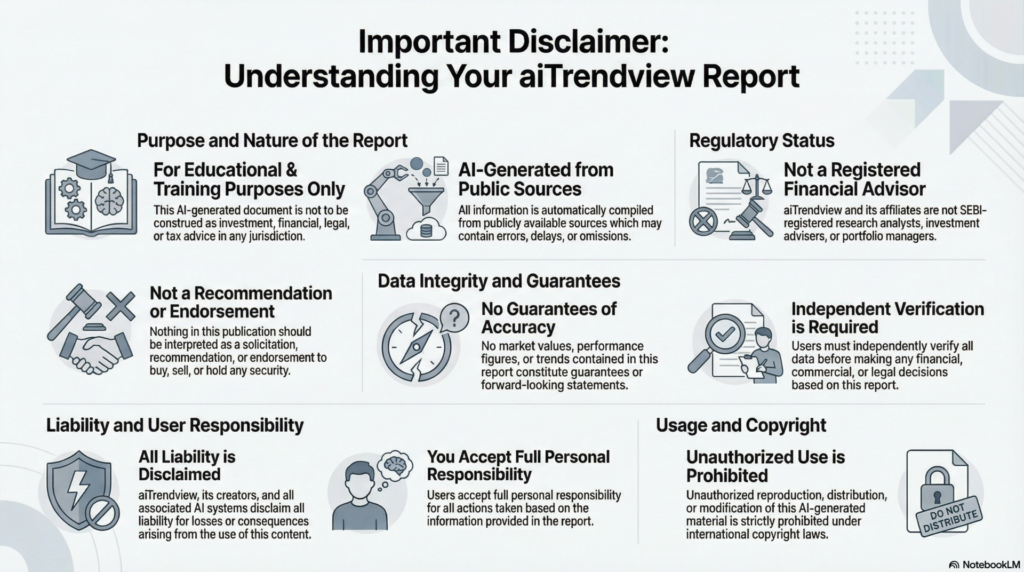
This aiTrendview report is an AI-generated document provided exclusively for educational and training purposes and shall not be construed as investment, financial, legal, or tax advice in any jurisdiction.
aiTrendview and its affiliates are not SEBI-registered research analysts, investment advisers, or portfolio managers, and all information herein is automatically compiled from publicly available sources that may contain errors, delays, or omissions.
Users must independently verify all data before making any financial, commercial, or legal decisions, as no market values, performance figures, or trends contained in this report constitute guarantees or forward-looking statements.
Nothing in this publication should be interpreted as a solicitation, recommendation, or endorsement to buy, sell, or hold any security.
aiTrendview, its creators, and all associated AI systems disclaim all liability for losses or consequences arising from the use or reliance upon this content, and users accept full personal responsibility for all actions taken based on it.
Unauthorized reproduction, distribution, or modification of this AI-generated material is strictly prohibited under international copyright, compliance, and intellectual-property laws.