
This fundamental research report focuses on Berkshire Hathaway Inc. (BRK), utilizing reported 2025 financial data. As Warren Buffett prepares for his planned transition at the end of this year, the 2025 financials reveal a conglomerate in a defensive, high-liquidity stance, prioritizing capital preservation over market expansion.
As we move through the final quarter of 2025, Berkshire Hathaway represents a study in strategic caution. The core narrative for this fiscal year is not one of aggressive acquisition, but of unprecedented liquidity accumulation. With a record-shattering cash pile and a disciplined retreat from major equity positions, Berkshire has effectively positioned itself as the “Lender of Last Resort” for a potential market correction in 2026. This report deconstructs the ten financial pillars that define the company’s current stance for advanced institutional and value-oriented readers.
While GAAP “Net Earnings” remained volatile due to mark-to-market accounting on the equity portfolio, the Operating Earnings—the true barometer of the conglomerate’s health—surged by 34% in Q3 2025 alone. This performance was anchored by a robust recovery in insurance underwriting and the significant interest income generated by its treasury holdings.
The most staggering metric of 2025 is Berkshire’s cash and cash equivalents, which hit a historic $381.7 billion by late Q3. This “mountain of money” is largely parked in short-term U.S. Treasury Bills. At current yields, this cash pile alone is generating approximately $20 billion annually in interest income, providing a risk-free earnings stream that rivals the net income of many Fortune 500 companies.
Berkshire reported a massive $13.49 billion in Operating Profit for Q3 2025, a 34% increase YoY. For advanced readers, this is the “clean” number that strips out the noise of stock price fluctuations. The primary drivers were the “Insurance – Underwriting” and “Insurance – Investment” segments, which benefited from higher premium rates and elevated interest rates.
After a volatile 2024, the insurance segment saw a sharp rebound. Underwriting earnings for the first nine months of 2025 hit $5.7 billion. GEICO, in particular, showed operational resilience by increasing premiums through policy-in-force growth, although it faced slight margin pressure toward year-end due to rising claim costs.
In 2025, Berkshire continued its trend of being a net seller of stocks. In Q3 alone, Buffett sold $14 billion more in equities than he purchased. Notable reductions included a further 14.9% trim of the Apple (AAPL) position and significant exits in Bank of America (BAC). This signals a fundamental view that market valuations are currently “stretched.”
The “engine” of Berkshire, its insurance float, climbed to $176 billion in Q3 2025, up $5 billion since the start of the year. This represents cost-free capital that Berkshire can deploy at will, further strengthening its solvency during Buffett’s final months as CEO.
Burlington Northern Santa Fe (BNSF) reported a 5% increase in quarterly profits to $1.45 billion in the latter half of the year. Despite broader macroeconomic headwinds in industrial output, BNSF managed to maintain cost discipline, proving its status as a critical, “wide-moat” infrastructure asset.
Unlike the rail and insurance segments, Berkshire Hathaway Energy (BHE) saw a decline in profits, falling to $1.49 billion in Q3. This was largely attributed to increased regulatory pressures and wildfire-related litigation costs in the Western U.S., highlighting the geographical and legal risks inherent in utility-scale operations.
In a move that caught many analysts by surprise, Berkshire performed zero share buybacks in the latter half of 2025. This is a definitive signal from Buffett and Greg Abel that they consider Berkshire’s own stock to be “fairly valued” or “fully valued,” adhering strictly to their principle of only buying back shares when they trade at a significant discount to intrinsic value.
Shareholders’ equity reached $700.4 billion by Q3 2025. For the advanced investor, the Book Value per Class B equivalent rose approximately 10.1% YoY, indicating that despite the lack of major acquisitions, the internal compounding of the wholly-owned subsidiaries remains highly effective.
With Greg Abel confirmed to take the CEO mantle at the end of 2025, the market is pricing in a “continuity premium.” Abel’s influence is already visible in the disciplined capital allocation and the focus on operational efficiency within the non-insurance businesses (Manufacturing, Service, and Retailing), which contributed $10.27 billion to operating earnings in the first nine months.
| Financial Parameter | 2025 Performance (Q3 Data) | Trend | Strategic Inference |
| Cash Holdings | $381.7 Billion | 🟢 Record | Maximum “dry powder” for market distress. |
| Operating Earnings | $13.49 Billion (Q3) | 🟢 +34% | Core business units are highly productive. |
| Net Income (GAAP) | $30.79 Billion (Q3) | 🟢 Volatile | Heavily influenced by equity mark-to-market. |
| Insurance Float | $176 Billion | 🟢 +$5B | Increasing the “free” capital pool. |
| Share Buybacks | $0 | 🔴 Paused | Suggests management sees no undervaluation. |
| Equity Net Selling | $14 Billion (Net) | 🔴 Cautious | Defensive pivot away from tech/financials. |
To illustrate the difference in 2025 strategies, we compare the “Value King” with the “Growth Giant.”
| Metric | Berkshire Hathaway | Tesla (TSLA) |
| Primary Goal | Capital Preservation | AI & Capacity Expansion |
| Cash Position | $381.7 Billion | $36.5 Billion |
| Capital Expenditure | Moderate (Maintenance) | Aggressive ($11B+ in AI/Robotics) |
| Buyback Policy | Price Dependent (Inactive) | Inactive (Focus on R&D) |
| 2025 Sentiment | Defensive/Opportunistic | Hyper-Growth/Pivot |
Berkshire Hathaway enters 2026 as a financial fortress. While some critics point to the “drag” of holding $381 billion in cash, the 2025 data shows that this cash is not idle—it is a high-yielding, risk-free asset that provides the company with unparalleled optionality. As the Buffett era concludes, the company is fundamentally stronger, leaner, and more liquid than at any point in its 60-year history.
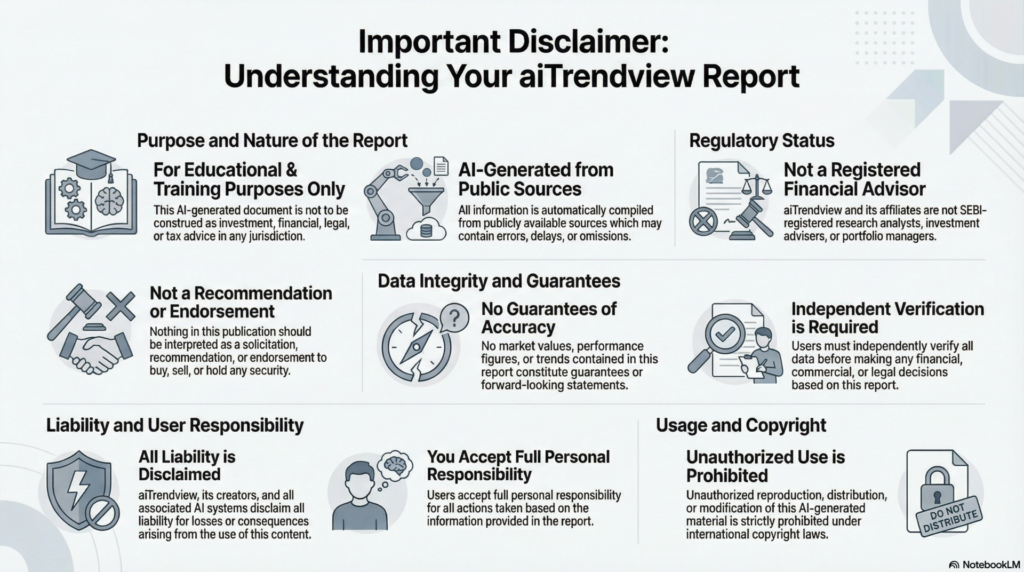
aiTrendview Global Disclaimer
This aiTrendview report is an AI-generated document provided exclusively for educational and training purposes and shall not be construed as investment, financial, legal, or tax advice in any jurisdiction.
aiTrendview and its affiliates are not SEBI-registered research analysts, investment advisers, or portfolio managers, and all information herein is automatically compiled from publicly available sources that may contain errors, delays, or omissions.
Users must independently verify all data before making any financial, commercial, or legal decisions, as no market values, performance figures, or trends contained in this report constitute guarantees or forward-looking statements.
Nothing in this publication should be interpreted as a solicitation, recommendation, or endorsement to buy, sell, or hold any security.
aiTrendview, its creators, and all associated AI systems disclaim all liability for losses or consequences arising from the use or reliance upon this content, and users accept full personal responsibility for all actions taken based on it.
Unauthorized reproduction, distribution, or modification of this AI-generated material is strictly prohibited under international copyright, compliance, and intellectual-property laws.