
Apple Inc. (AAPL): The Ecosystem Fortress & The Intelligence Pivot
Executive Summary: Growth Beyond the iPhone Plateau
Apple’s fiscal 2024 was defined by financial resilience in a mature smartphone market and a strategic shift toward Apple Intelligence. While total revenue grew a steady 2% to $391 billion, the underlying story is one of margin expansion and the massive scaling of the Services division. With a hardware installed base exceeding 2.2 billion active devices, Apple is successfully leveraging its “ecosystem lock” to transition into a recurring-revenue powerhouse, even as it navigates headwinds in Greater China and regulatory scrutiny in Europe.
The company’s “Net Cash Neutral” goal continues to drive the most aggressive capital return program in corporate history, anchored by a $110 billion buyback authorization. As 2025 begins, the focus shifts from unit sales to “per-user monetization” through AI-enhanced software and spatial computing via the Vision Pro.
1. Top-Line Revenue: The Services Ascendance
Apple reported total net sales of $391.04 billion for FY 2024. While the iPhone still commands 51% of total revenue ($201.2B), it grew just 0.3% YoY. The real engine of growth was Services, which surged 13% to $96.2 billion. Services now represent roughly 25% of total revenue, up from under 15% five years ago, fundamentally changing Apple’s valuation profile from a cyclical hardware maker to a software-led entity.
2. Gross Margin Expansion: A New Benchmark
Apple achieved a record-breaking 46.2% consolidated gross margin in 2024, up from 44.1% in 2023. This expansion was driven by a favorable mix of Services (which carry a staggering 74% margin) and cost-saving tailwinds in the hardware supply chain. For advanced readers, this 210-basis-point expansion during a period of global inflation is a testament to Apple’s unrivaled pricing power and vertical integration.
3. Net Income and One-Time Impacts
GAAP Net Income for 2024 was $93.74 billion, a slight decrease from $97 billion in 2023. This decline was primarily due to a one-time $10.2 billion income tax charge related to the European General Court’s State Aid decision (the “Ireland tax” ruling). Excluding this one-time item, Apple’s underlying profitability and Operating Income ($123.2B) showed robust health.
4. Capital Return: The Buyback Machine
Apple remains the gold standard for shareholder yield. In 2024, the company returned over $110 billion to shareholders, primarily through share repurchases. Over the last decade, Apple has spent over $750 billion on buybacks, reducing its share count and consistently boosting Earnings Per Share (EPS), which hit $6.08 (diluted) despite the flat top-line growth.
5. Research & Development: Ramping for AI
R&D spending reached $31.37 billion in 2024, an all-time high. This represents 8% of revenue, a significant “intensity” increase from historical norms. CEO Tim Cook has confirmed that much of this capital is fueling Apple Intelligence and custom silicon (M-series and A-series chips), ensuring that Apple maintains its edge in on-device AI processing without relying on third-party cloud compute.
6. Regional Dynamics: The China Challenge
A key fundamental risk emerged in Greater China, where revenue fell 8% YoY to $67 billion. This decline is attributed to a resurgence in domestic competition (Huawei) and geopolitical tensions. Conversely, Europe grew by 7%, and emerging markets like India and Indonesia reached new all-time revenue records, acting as a crucial geographic hedge.
7. Balance Sheet Solvency: Net Cash Neutral Goal
Apple ended 2024 with $156 billion in cash and marketable securities and $106 billion in total debt. The company continues to trend toward its goal of becoming net cash neutral. With a current ratio of roughly 0.87, Apple operates with extreme capital efficiency, relying on its massive operating cash flow ($108.8B) rather than large cash piles for stability.
8. Inventory & Operational Efficiency
Apple’s operational prowess is reflected in its inventory management. Despite generating $391B in sales, Apple holds only $7.3 billion in inventory. This reflects a “just-in-time” supply chain that is the envy of the industry, minimizing the risk of hardware write-downs in a fast-moving tech market.
9. Segment Performance: iPads and Wearables
10. The AI Catalyst: Apple Intelligence
The 2024 financials set the stage for the “Apple Intelligence” supercycle. By restricting AI features to the iPhone 15 Pro and later models, Apple has created a forced upgrade path for its 2.2 billion device install base. Investors are viewing 2024 as the “trough” before an AI-driven replacement cycle begins in earnest in 2025.
Sector Comparison: Apple vs. Microsoft (FY 2024)
| Parameter | Apple (AAPL) | Microsoft (MSFT) | Strategic Insight |
| Total Revenue | $391.0 Billion | $245.1 Billion | Apple remains the larger revenue generator by a wide margin. |
| Net Income | $93.7 Billion | $88.1 Billion | Despite the tax charge, Apple’s absolute profit leads the sector. |
| Gross Margin | 46.2% | 69.8% | Microsoft’s software-heavy model yields higher margins than Apple’s hardware mix. |
| R&D Spend | $31.4 Billion | $30.1 Billion | Both firms are spending nearly identically to win the AI race. |
| Cash Position | $156.0 Billion | $75.5 Billion | Apple’s liquidity provides a massive buffer for acquisitions or buybacks. |
Key Takeaways for Investors
Apple is no longer a growth stock in the traditional “high-double-digit” sense; it has evolved into a Value-Growth Hybrid. The combination of a 74% margin Services business and an unprecedented share buyback program creates a “floor” for the stock price. The primary 2025 catalyst will be the conversion of the “installed base” into “AI-active users,” which could re-accelerate the iPhone segment.
Would you like me to analyze the specific impact of the “Apple Intelligence” rollout on Apple’s projected 2025 iPhone ASPs (Average Selling Prices)?
aiTrendview Global Disclaimer
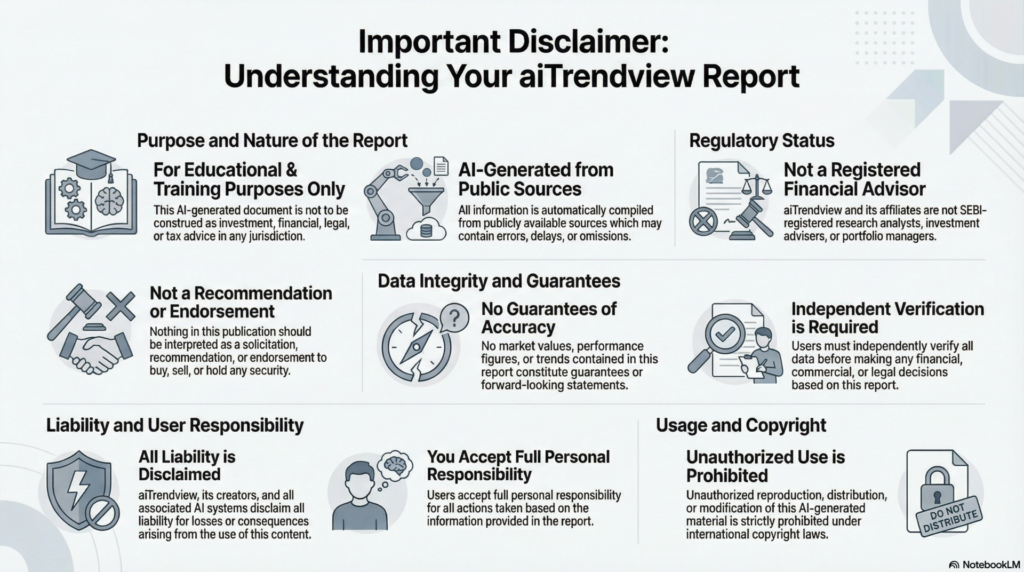
This aiTrendview report is an AI-generated document provided exclusively for educational and training purposes and shall not be construed as investment, financial, legal, or tax advice in any jurisdiction.
aiTrendview and its affiliates are not SEBI-registered research analysts, investment advisers, or portfolio managers, and all information herein is automatically compiled from publicly available sources that may contain errors, delays, or omissions.
Users must independently verify all data before making any financial, commercial, or legal decisions, as no market values, performance figures, or trends contained in this report constitute guarantees or forward-looking statements.
Nothing in this publication should be interpreted as a solicitation, recommendation, or endorsement to buy, sell, or hold any security.
aiTrendview, its creators, and all associated AI systems disclaim all liability for losses or consequences arising from the use or reliance upon this content, and users accept full personal responsibility for all actions taken based on it.
Unauthorized reproduction, distribution, or modification of this AI-generated material is strictly prohibited under international copyright, compliance, and intellectual-property laws.