
Navigating the “Trough”: Tesla’s Strategic Transition to an AI-Energy Conglomerate
The fiscal year 2024 marked a definitive turning point for Tesla, Inc. (TSLA), as the company navigated a “brutal” yet foundational period of structural realignment. While consolidated revenue edged up slightly by 1% to $97.7 billion, this top-line stability masked a significant internal shift: a 6% decline in automotive sales was offset by a staggering 67% surge in the Energy Generation and Storage segment. For the advanced reader, the 2024 data reveals a firm deliberately sacrificing short-term automotive margins to defend market share and fund a massive, high-stakes expansion into AI-driven compute and utility-scale energy storage.
As we move into 2025, Tesla’s “fortress balance sheet”—anchored by $36.5 billion in liquidity—serves as the primary enabler for its next growth chapter. Management has pivoted the corporate narrative from vehicle delivery counts to “autonomous utility,” fueled by record R&D spending and the deployment of massive H100 GPU clusters. This report breaks down the ten critical financial and operational pillars that define Tesla’s current fundamental standing, providing the granular data necessary to evaluate its trajectory as it aims to transition from a leading EV manufacturer to the world’s preeminent AI and robotics entity.
Tesla, Inc. (TSLA): A Strategic Fundamental Analysis (FY 2024 Edition)
The narrative surrounding Tesla has shifted from “hyper-growth automaker” to an “AI and Energy conglomerate.” As 2024 concludes, the financials reveal a company navigating a “trough” in automotive cycles while aggressively reallocating capital toward autonomous compute and energy storage.
1. Top-Line Revenue Dynamics: The Diversification Pivot
In FY 2024, Tesla’s total revenue reached $97.69 billion, representing a modest 1% year-over-year (YoY) increase. While automotive sales revenue actually declined by roughly 6% to $77 billion due to aggressive price cuts (ASPs) and a cooling global EV market, the Energy Generation and Storage segment surged by 67% to $10.09 billion. This signifies a critical shift: Tesla is no longer just a car company; its energy arm now provides a vital hedge against automotive cyclicality.
2. Automotive Sales & Delivery Performance
Tesla delivered 1.789 million vehicles in 2024, a slight decline from 1.81 million in 2023. However, Q4 2024 saw a record recovery with 495,570 deliveries, driven by the Cybertruck production ramp and strong demand in China. The “Model 3/Y” remains the bedrock of the volume, accounting for approximately 95% of total deliveries. The focus for 2025 has moved toward the “Next-Gen” affordable platform to reignite volume growth.
3. Margin Compression and Recovery
The most scrutinized metric has been the GAAP Gross Margin, which settled at 17.9% for FY 2024, down from 18.2% in 2023 and the 25%+ highs of 2022. This compression is the direct result of financing incentives and price reductions used to maintain market share. However, Energy margins provided a silver lining, hitting a record 30.5% in Q3 2024, suggesting that as energy becomes a larger part of the mix, consolidated margins may have bottomed.
4. Earnings Per Share (EPS) & Net Income
Tesla reported a GAAP Net Income of $7.15 billion for 2024, a significant 52% decline from the $14.97 billion reported in 2023. It is important to note that 2023 results were inflated by a one-time $5.7 billion tax benefit. The Diluted EPS for 2024 stood at $2.04, reflecting the impact of price wars and increased R&D spending on AI infrastructure (Dojo and FSD).
5. Free Cash Flow (FCF) and Capital Allocation
Despite the earnings dip, Tesla’s cash generation remains robust. The company generated $14.92 billion in Operating Cash Flow, yielding a Free Cash Flow of $3.58 billion after a record $11.34 billion in Capital Expenditures (CapEx). This high CapEx-to-FCF ratio highlights Tesla’s “all-in” bet on AI training clusters and the expansion of the Nevada and Texas Gigafactories.
6. Liquidity and Solvency: The Fortified Balance Sheet
Tesla ended 2024 with a massive liquidity cushion of $36.5 billion in Cash and Short-term Investments. With a Total Debt-to-Equity ratio of approximately 0.17, Tesla remains one of the least levered companies in the global automotive sector. This “fortress balance sheet” allows them to withstand prolonged high-interest-rate environments that are currently crippling highly-levered legacy peers and EV startups.
7. R&D Intensity: The AI Premium
Tesla’s Research and Development (R&D) expenses reached $4.54 billion in 2024 (up 14% YoY). Unlike traditional OEMs, Tesla’s R&D is increasingly software-centric. The company is currently deploying tens of thousands of NVIDIA H100 GPUs to accelerate FSD (Full Self-Driving) v12 and Optimus (humanoid robot) development, aiming for a “Total Addressable Market” (TAM) that exceeds the trillion-dollar transportation industry.
8. Energy Storage Deployment (GWh)
In 2024, Tesla deployed 31.4 GWh of energy storage, nearly doubling its 2023 output. The Megapack continues to dominate the utility-scale battery market. At a 30%+ gross margin, this segment is now the primary driver of Tesla’s “high-quality” earnings growth, often overlooked by analysts focused solely on vehicle delivery “misses.”
9. Operational Efficiency: Cost Per Vehicle
A critical fundamental win in 2024 was the reduction in Cost of Goods Sold (COGS) per vehicle, which fell to approximately $35,100 in the latter half of the year. Through “unboxed” manufacturing techniques and lower raw material costs (Lithium), Tesla is maintaining profitability at price points where competitors are losing thousands per unit.
10. Valuation and Forward Outlook
Trading at a forward P/E that significantly leads the auto industry, Tesla’s valuation remains tied to its Autonomous Vehicle (AV) roadmap. With Regulatory Credits contributing $2.76 billion to the bottom line in 2024, the company’s “pure” auto profit is under pressure. However, management’s guidance of 20%-30% vehicle growth in 2025 and the expected launch of “Unsupervised FSD” in Texas/California are the primary catalysts for institutional investors.
To provide a professional-grade summary for advanced readers, the following table synthesizes Tesla’s FY 2024 performance, breaking down the headline figures into operational drivers and segment-specific health.
Tesla, Inc. (TSLA) FY 2024 Comprehensive Financial Summary
| Financial Pillar | Metric (FY 2024) | YoY Change / Status | Strategic Context for Investors |
| Total Revenue | $97.69 Billion | 🟢 +1% | Growth was buoyed by non-auto segments; Automotive revenue actually fell ~6% due to lower ASPs. |
| Net Income (GAAP) | $7.15 Billion | 🔴 -53% | Sharp decline from 2023’s $15B, which was inflated by a one-time $5.7B non-cash tax benefit. |
| Gross Margin (GAAP) | 17.9% | 🔴 -30 bps | Down from 18.2% in 2023. Continued pressure from price cuts and financing incentives. |
| Operating Margin | 7.2% | 🔴 -200 bps | Reflects increased R&D spend on AI/Dojo and lower fixed cost absorption on vehicle production. |
| Free Cash Flow (FCF) | $3.58 Billion | 🔴 -19% | Impacted by record $11.34B CapEx (+27%) as Tesla aggressive builds AI compute clusters. |
| Cash & Investments | $36.50 Billion | 🟢 +25% | A “fortress” balance sheet; provides liquidity to fund FSD and Optimus without debt markets. |
| Energy Rev. Growth | $10.09 Billion | 🟢 +67% | The primary growth engine; Megapack deployments surged to 31.4 GWh in 2024. |
| Automotive Deliveries | 1.789 Million | 🟡 -1% | Slight volume dip; Model Y remained the top-seller, but market saturation slowed growth. |
| Cost Per Vehicle | <$35,000 | 🟢 Record Low | Operational win; COGS per unit hit record lows in Q4, partially offsetting price cuts. |
| Reg. Credits Rev. | $2.76 Billion | 🟢 +54% | Pure-margin revenue from competitors; a significant contributor to GAAP profitability. |
Key Takeaways for the Advanced Reader
| Parameter | Tesla (TSLA) | BYD (China) | Mercedes-Benz | Competitive Insight |
| Total Revenue | $97.69 Billion | $107.2 Billion | $153.9 Billion ($145.6B EUR) | BYD surpassed Tesla in total revenue for the first time in 2024. |
| BEV Sales Volume | 1.79 Million | 1.76 Million | ~0.24 Million | Tesla narrowly held the global BEV crown, though BYD led in total NEVs (4.27M). |
| Operating Margin | 7.2% | 6.4% | 8.1% | Tesla remains the most profitable “pure-play” EV maker, but legacy luxury margins are higher. |
| Gross Margin | 17.9% | ~20.2% (Auto) | 21.0% | BYD’s vertical integration (batteries) gave it a margin edge over Tesla’s price-cut strategy. |
| R&D Spend | $4.54 Billion | $5.5 Billion+ | $9.2 Billion | Tesla’s spend is efficient and AI-focused; legacy peers spend more on hardware platforms. |
| Free Cash Flow | $3.58 Billion | $4.0 Billion+ (Est.) | $9.7 Billion | Tesla’s FCF is lower due to massive $11.3B CapEx into AI and Gigafactories. |
| Cash Reserves | $36.5 Billion | ~$15 Billion | $33.2 Billion | Tesla maintains the strongest liquidity position in the EV-only sector. |
The most significant data point of 2024 is BYD surpassing Tesla in total annual revenue. While Tesla focuses on high-complexity AI software and fewer, high-volume models, BYD’s “brute force” approach—releasing dozens of models across every price bracket—allowed it to scale revenue by 29% YoY. Tesla is now a premium software and energy company, while BYD is the world’s volume leader in electrified transport.
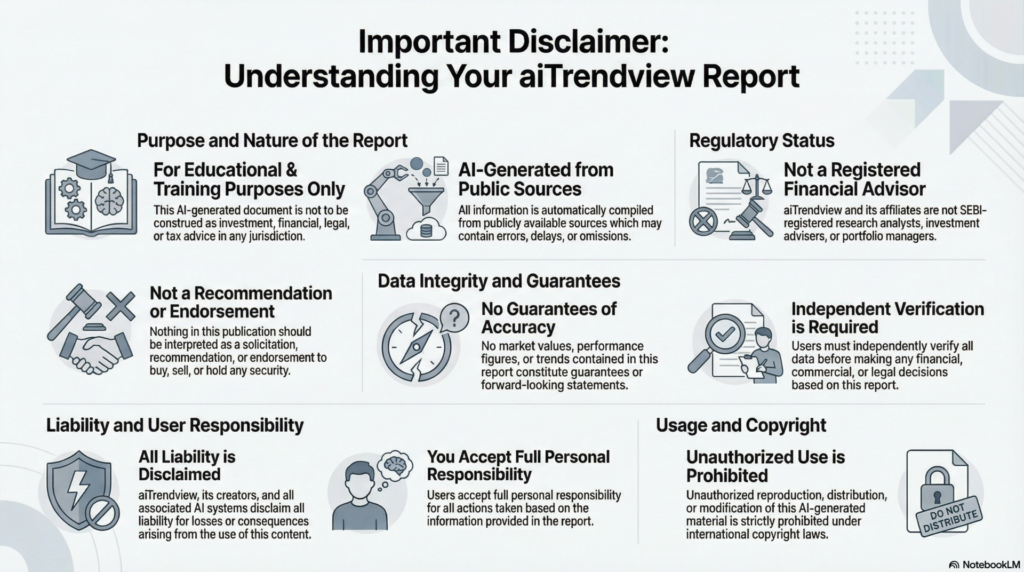
This aiTrendview report is an AI-generated document provided exclusively for educational and training purposes and shall not be construed as investment, financial, legal, or tax advice in any jurisdiction.
aiTrendview and its affiliates are not SEBI-registered research analysts, investment advisers, or portfolio managers, and all information herein is automatically compiled from publicly available sources that may contain errors, delays, or omissions.
Users must independently verify all data before making any financial, commercial, or legal decisions, as no market values, performance figures, or trends contained in this report constitute guarantees or forward-looking statements.
Nothing in this publication should be interpreted as a solicitation, recommendation, or endorsement to buy, sell, or hold any security.
aiTrendview, its creators, and all associated AI systems disclaim all liability for losses or consequences arising from the use or reliance upon this content, and users accept full personal responsibility for all actions taken based on it.
Unauthorized reproduction, distribution, or modification of this AI-generated material is strictly prohibited under international copyright, compliance, and intellectual-property laws.